
For a while now, I’ve been studying human anatomy to improve my proportions and make it easier to create characters. I’ve been using a textbook called Basic Human Anatomy: An Essential Visual Guide for Artists by Roberto Osti (2016). In case you’re wondering about the full citations for this, here it is in APA format:
Osti, R. (2016). Basic Human Anatomy: An Essential Visual Guide for Artists. New York, New York, United States of America: The Monacelli Press.
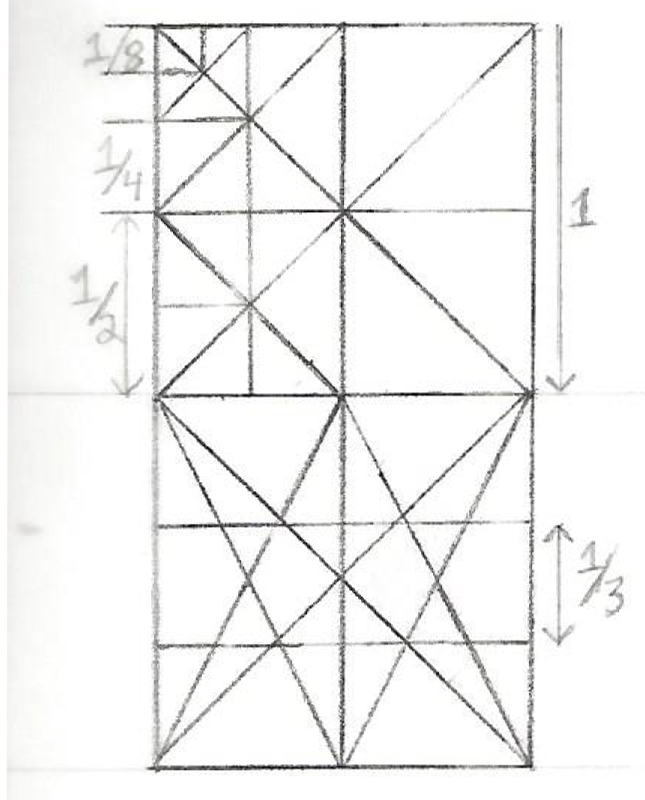
I started my studies by reading the book and discovered the proportions Osti uses are based on the human head. According to the author’s drawings, the average human body is 7.5 heads tall. Osti also provided an enlightening way to easily divide a 1-by-1 unit square into either halves and quarters or into thirds.
For my first attempt, I tried to recreate the diagram for the male stereometric figure seen in Chapter 1 (Osti, 2016, pp. 16-17)
. I did this on some 11-by-14-inch (27.9-by-35.6-cm) drawing paper in a sketchbook. To simplify the measurement process, I used a scale of 1 inch = 1 foot (in metric terms, that’s 1/12 scale).
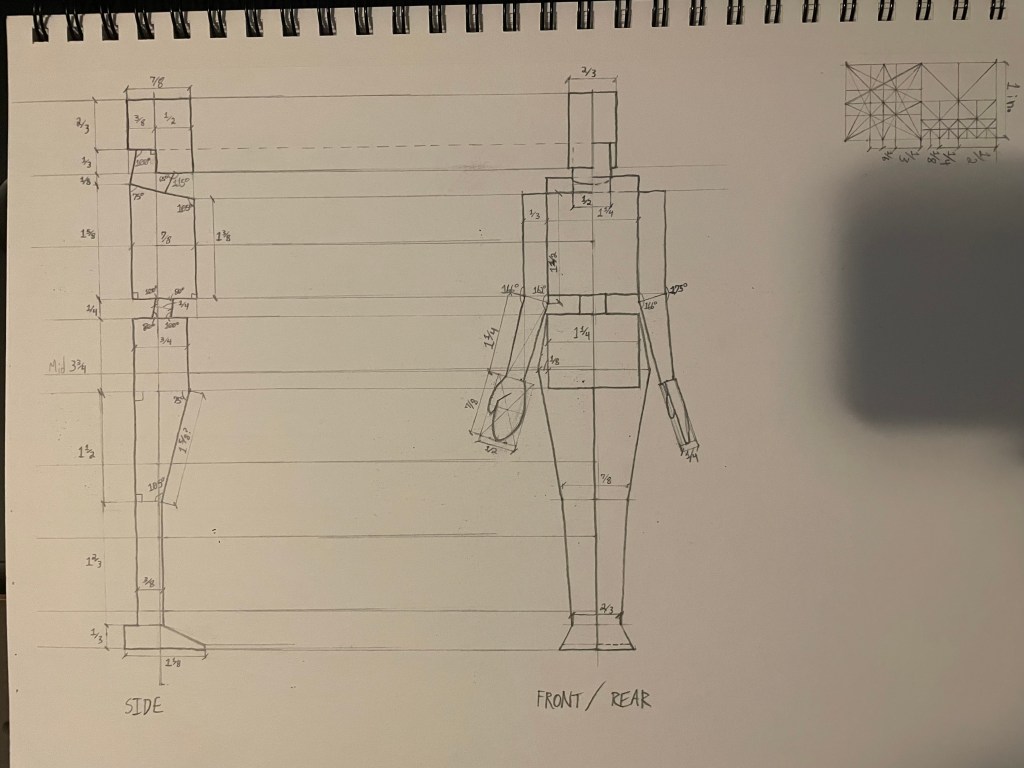
Ultimately, it proved difficult for me because the arms were positioned at an angle, and the hands were curved so it was difficult to draw them using the diagram as a reference.
I then tried to trace both male and female stereometric figures (pp. 16-19) to speed up the process.
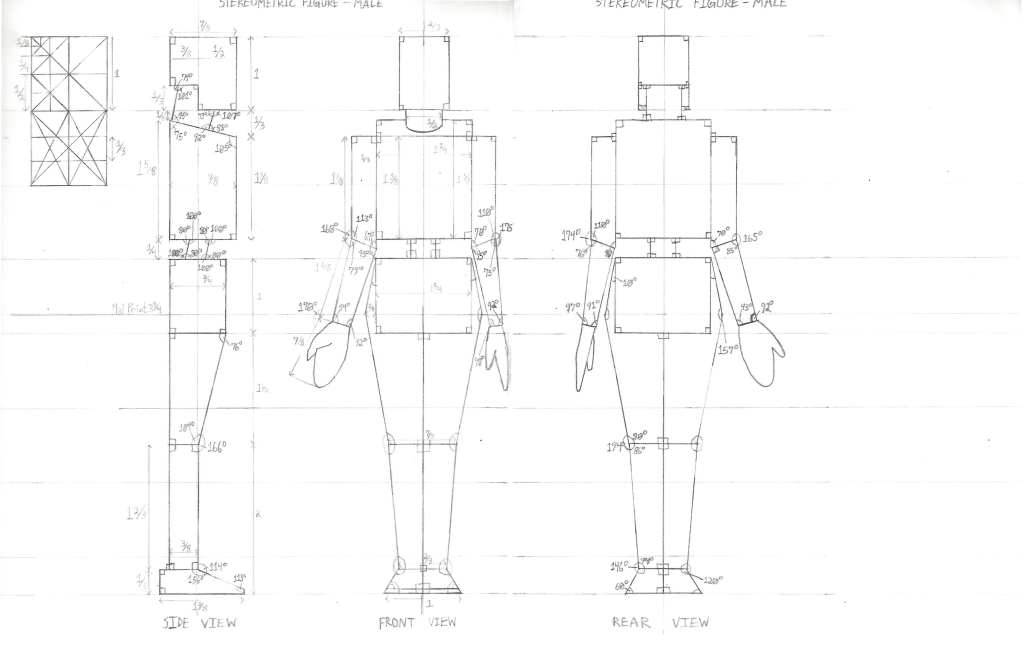
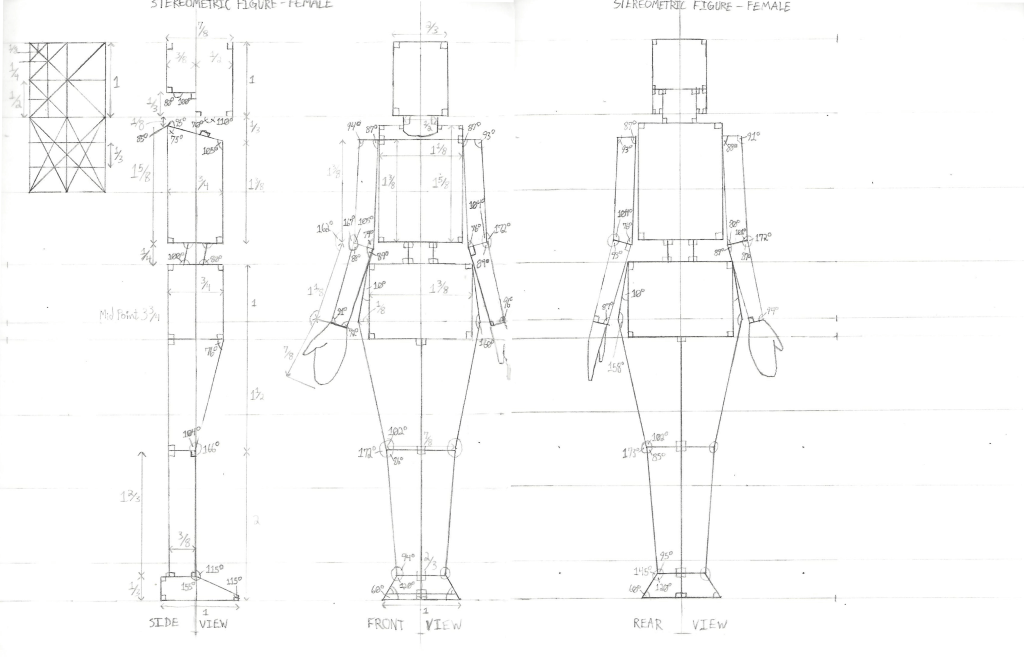
I succeeded, then moved on to the structural skeletons and then the actual skeletons.
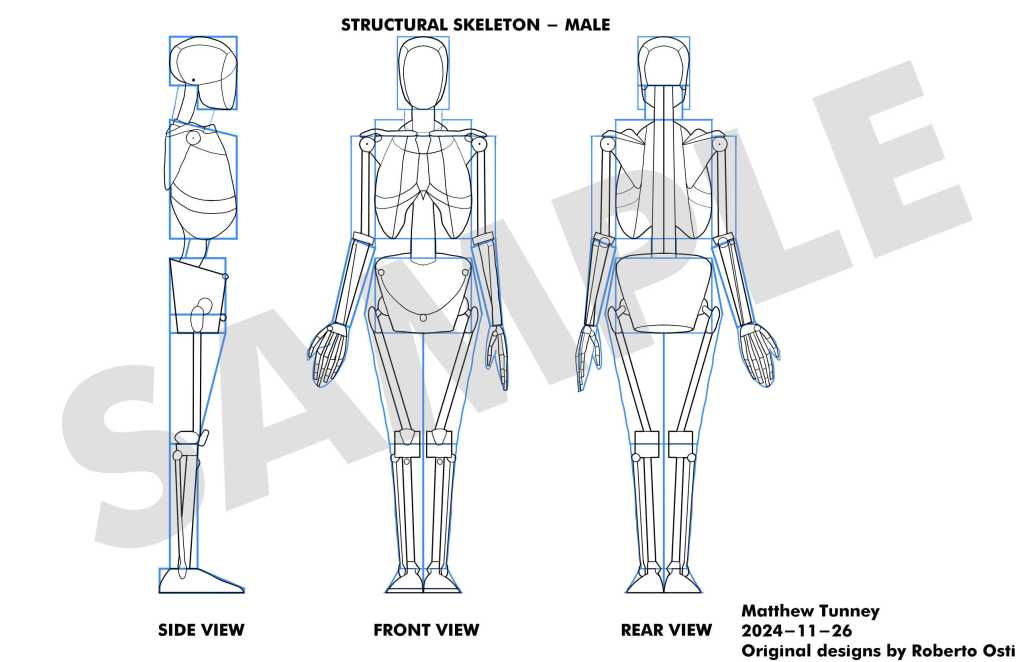
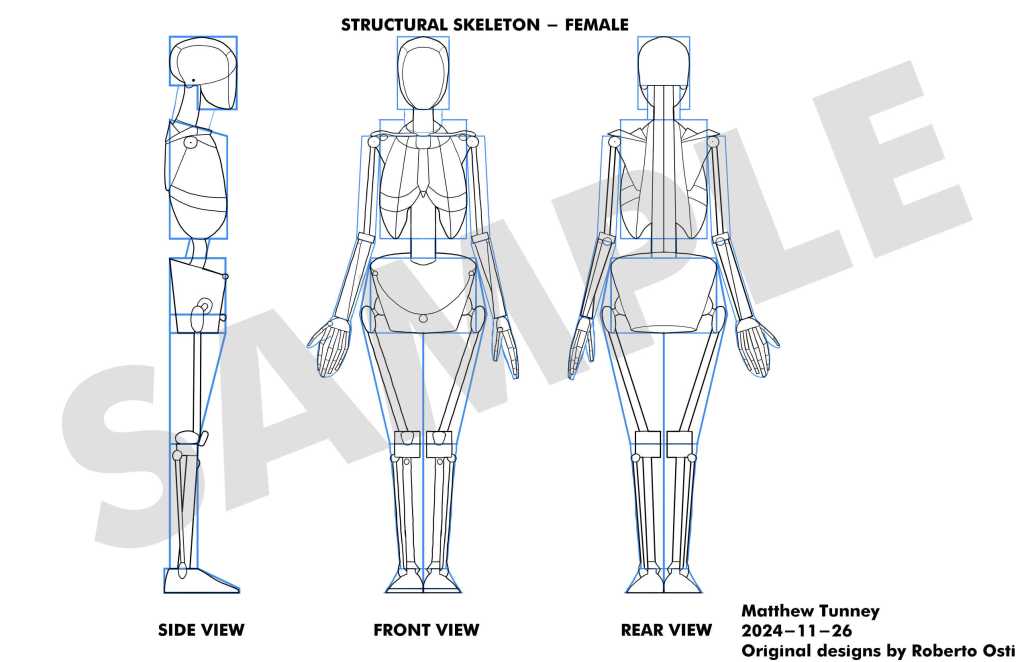
I scanned my tracings and retraced them in a drawing software, then used those as a guide to create the structural skeletons seen above, using the diagrams in the book as references.
The next challenge is the actual skeletons. I started with the male skeleton using the diagrams in the textbook (p. 48) as a reference, and then consulted more detailed diagrams (pp. 90-109) to draw it. What I noticed after completing initial sketches of the skeleton was that I was missing two sets of ribs on the front view. Adding those ribs in also revealed that the ribcage was slightly out of proportion with the rest of the body.
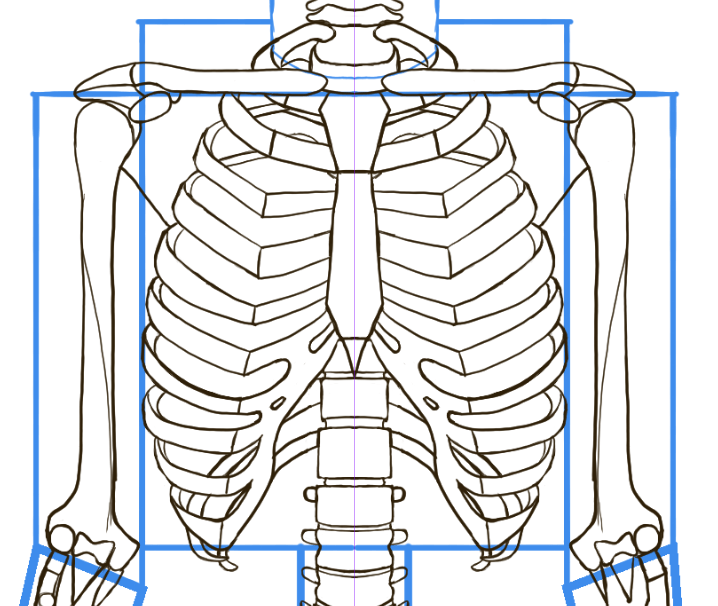
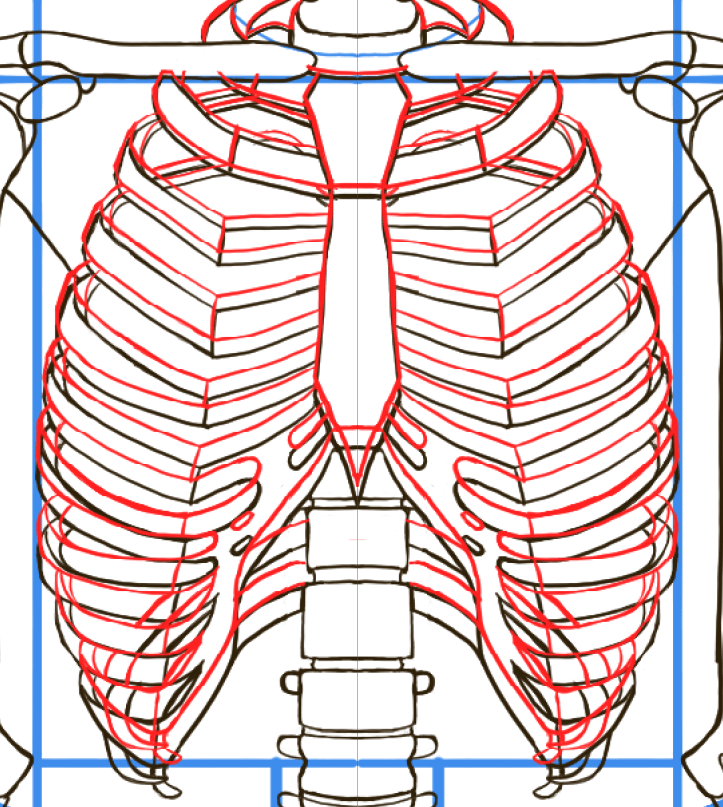
The red lines shown above are the corrected version. Now all that’s left is to complete the skeleton’s rear and side views and then colour the whole diagram. I will post more of my progress in the next update.
Thanks for reading!
 Matthew Tunney
One response to “Human Anatomy Study”
[…] male skeleton diagram is complete. I ended up reverting the corrected version (see previous entry) back to the original. This was so the perspectives would be as consistent with each other as […]
LikeLike